
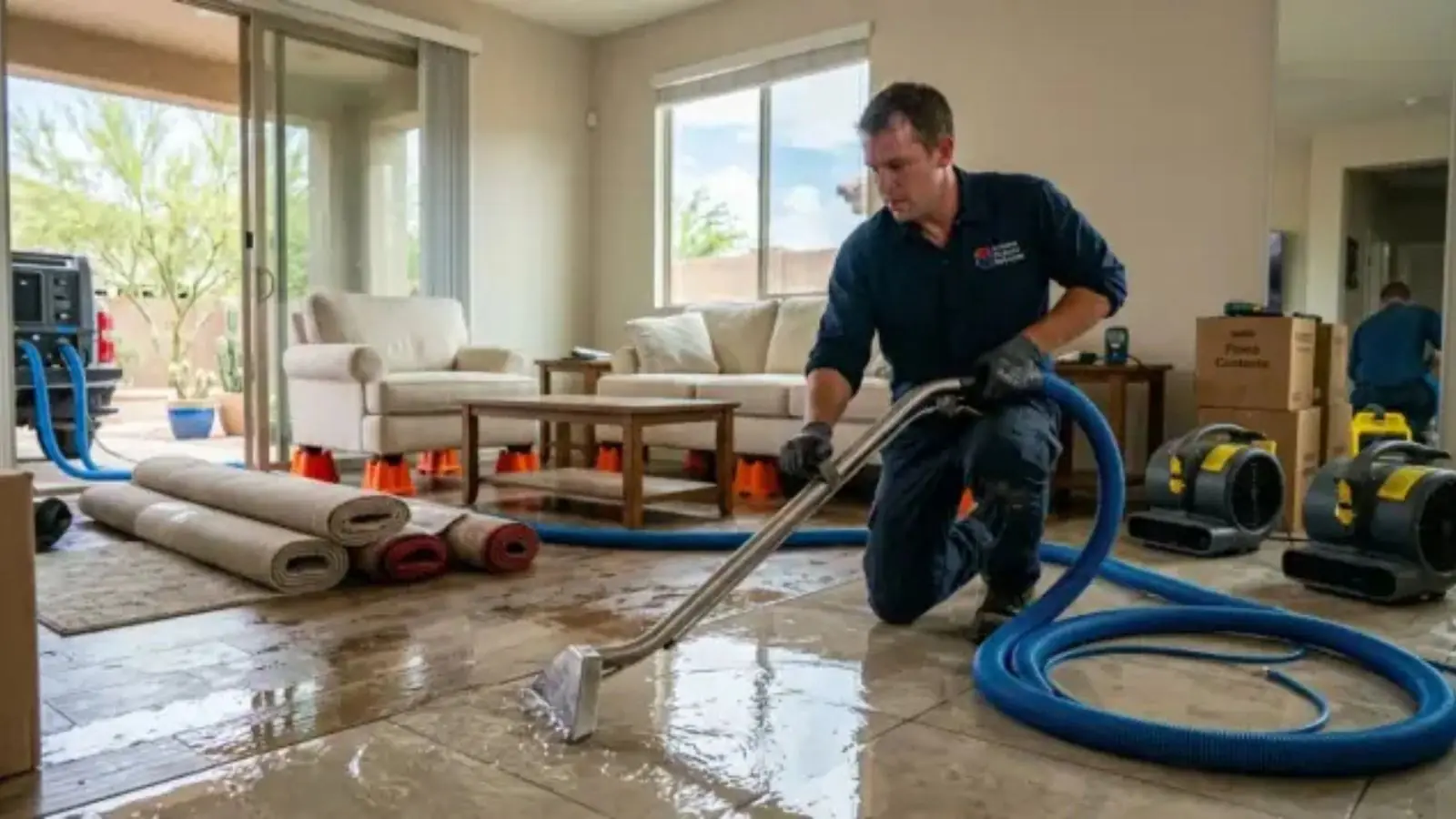
Water Damage Restoration
in Yucaipa, CA
Water damage restoration is the work of removing water, drying the structure, cleaning affected materials and rebuilding what was lost. Our water damage restoration service in Yucaipa begins with one call, then crews pump out standing water, set air movers and dehumidifiers, and lay out the job and its cost before any equipment goes down. Our reach covers Yucaipa plus Redlands, Calimesa, Mentone, Beaumont and Loma Linda. If water is still spreading, call now and we will walk you through what to do while the crew is being sent.
- Licensed and insured
- Scope and price explained before work starts
- Same-day response when available
If water is on the floor right now
Active water damage in your home?
The dispatch line answers around the clock, including nights, weekends and holidays.
What We Handle in Yucaipa
Most calls start with something simple and urgent: a supply line let go under a sink, a water heater split, or a roof leak soaked a ceiling during a winter storm. The work that follows depends on where the water came from, how long it sat, and which materials it reached. Each service below covers one stage of that job, so you can see which one fits your situation.
Water Damage Repair
Rebuilding drywall, insulation, flooring and paint once everything is dry. Start with water damage repair if the drying is done and you need the house put back together.
Emergency Water Removal
Pumps and extraction units pull standing water out fast. Active leaks and flooded rooms belong with emergency water removal.
Water Mitigation
The first one to three days decide how much material survives. Water mitigation covers moisture mapping, drying equipment and stopping the spread.
Water Damage Cleanup
Wet debris, soaked carpet pad and contaminated materials get removed and the area is sanitized. See water damage cleanup for that stage.
Flood Damage Restoration
Storm runoff, mud and groundwater bring heavier contamination. Flood damage restoration handles garages, crawl spaces and lower levels.
Mold Remediation
Mold follows moisture that stayed too long. Our mold remediation page explains containment, removal and clearance testing.
What You Can Expect When You Call
Water damage is stressful, and the first call often happens in the middle of the night. These are the commitments built into every job, written the way we would want them explained to us.
24/7 dispatch
The line is staffed every hour of every day, so a pipe that fails at 2 a.m. gets the same attention as one that fails at noon.
Scope and price first
Before work begins, we explain what will be done, which equipment goes where and how the cost is built.
Same-day response when available
If a crew is open, it heads your way the same day. If every crew is out, you hear that straight away and get tips for protecting the house until one arrives.
Written scope
A documented scope of work, with photos and moisture readings, gives you something concrete to hand your insurer.
From First Call to a Dry, Repaired Home
Call the line
Describe the source, the rooms affected and any safety concerns. We tell you what to shut off and what to leave alone.
Assess
A technician reads moisture with meters and a thermal camera, names the water category and writes the scope.
Dry and clean
Extraction, air movers, dehumidifiers and removal of materials that cannot be saved begin right away.
Rebuild
Once readings return to normal, drywall, flooring and paint are repaired so the rooms look finished again.
Not every job needs all four steps. A small supply-line leak caught in an hour may need only extraction and a few days of drying, while a slow ceiling leak can mean opening the wall before anyone knows how far it went. The assessment is what sorts one from the other, and it is the reason a quick call usually costs less than waiting.
For loss that started with sewage or floodwater, the cleanup stage grows and safety rules get stricter. Read about flood damage restoration if that describes your situation.
What Drives the Cost of Water Damage Work
Nobody can quote a fair number for water damage over the phone, because two houses with the same leak can have very different outcomes. These five factors do most of the work in setting the final figure.
| Factor | Why it matters |
|---|---|
| Water category | Clean supply water (Category 1) dries and cleans differently from gray or sewage water (Categories 2 and 3), which require removal of porous materials. |
| Area affected | More wet square footage means more equipment, more days of drying and more material to remove or replace. |
| Materials involved | Drywall, carpet pad and insulation are often replaced, while hardwood and tile can sometimes be dried in place. |
| Drying time | Each air mover and dehumidifier runs for days and is monitored with daily moisture readings. |
| Rebuild scope | Painting a patched wall costs far less than replacing cabinets, flooring and a section of ceiling. |
Want your real number? Call (909) 505-3870 and describe what you see, and we explain how the price is built before any work begins.
A general note on insurance
A burst pipe is a sudden and accidental event, and homeowners policies often respond to it. Slow leaks and neglect often are not covered, and a flood normally requires its own policy. Coverage depends on the wording, so check your policy or ask your insurer.
What to document before cleanup begins
Film and photograph each wet room with the date showing, write down what got soaked, and save receipts for anything you buy in a hurry. Do not discard ruined belongings until the insurer clears you to. The written scope we prepare then adds moisture readings and equipment logs to your own record.
Water Damage in Yucaipa Neighborhoods
Yucaipa sits at roughly 2,600 feet in the valley the Serrano people called Yukaipa't, "green valley." Most winter rain arrives in a few storms, and when it does, roof flashing, window sills and old supply lines get tested all at once. After a storm, check ceilings and the corners of exterior walls first, because that is where slow leaks usually show up.
Uptown, the downtown core where the Performing Arts Center opened in 2019, mixes older commercial buildings with homes, and a leak in a shared wall can reach a neighbor before anyone notices. North Bench is served by its own Cal Fire station, which tells you how far some of those streets sit from the valley floor, so we ask about access early and plan equipment loads accordingly.
Near Wildwood Canyon State Park and the hills above Yucaipa Regional Park, runoff has a long way to fall. Oak Glen showed what steep ground can do in 2022, when Tropical Storm Kay brought flooding and mudflows and Yucaipa Police ordered some residents out. If your home sits below a burned slope, expect mud to arrive faster than the forecast suggests.
Crafton Hills College and the Yucaipa Adobe, built in 1842 and now California Historical Landmark No. 528, are good reminders that this valley has been settled a long time. Older structures often hide older plumbing. If you are unsure about your main shutoff, your water bill names your provider, and in Yucaipa that is usually the Yucaipa Valley Water District.
Service Areas Around Yucaipa
Our crews respond across Yucaipa, ZIP 92399, and the nearby towns listed below. Each town has its own page covering local conditions and the ZIP codes we serve there.
In Redlands we serve ZIP codes 92374 and 92373, and in Calimesa ZIP 92320 is just south of the Yucaipa line. Mentone, ZIP 92359, sits to the northwest along Mill Creek Road. Farther out, Beaumont is covered under ZIP 92223 and Loma Linda under ZIP codes 92354 and 92350.
Reach the town page that matches your address to see ZIP-specific details, or start with Redlands or Calimesa, the two closest neighbors.
Ask Any Company Which Standard Its Crews Follow
Two published documents shape professional work in this trade. ANSI/IICRC S500 covers water damage restoration, including how water is classified and how drying is documented. ANSI/IICRC S520 covers mold remediation.
You do not need to memorize either one. Ask the company on the phone whether its crews work to them, and ask what readings and photos you will receive. A clear answer is a good sign, and a vague one is worth a second call elsewhere.
Water Damage Restoration Questions in Yucaipa
Stop the source if you can do it safely, usually by closing the main water valve. Keep people and pets out of wet areas near electrical panels, then call the 24/7 emergency line. Take photos before anything is moved, and lift valuables off wet floors.
When a crew is free, it comes out that day. If none is, you hear that right away along with steps for holding the water back. Water damage grows by the hour, so call as soon as you see it.
Most structural drying runs about three to five days, depending on materials and the amount of water, and technicians check moisture readings daily to know when it is finished. Hardwood, plaster and insulation can take longer than carpet and drywall.
Pumps and extraction units take out standing water, air movers circulate air over wet surfaces, and LGR or desiccant dehumidifiers dry the air itself. Meters and thermal cameras show where water is hiding behind walls.
No. Restoration cleans up and dries a loss that already happened, then repairs the damage. Waterproofing or foundation work changes how water enters a building, and that belongs to a different trade. If your leak keeps returning, we will say so and point you toward the right specialist.
It depends on the policy and the cause. A burst pipe that fails without warning is the kind of loss many policies pay for, while a drip left alone for months usually is not, and rising flood water tends to need a separate flood policy. Read the policy wording or phone your insurer, and keep photos, a damage list and receipts.
Large losses involve more rooms, more equipment and usually an adjuster's visit. We document moisture readings, photograph each room and provide a written scope so the assessment rests on records. Call the line and describe the size of the loss.
Still have a question?
Call the 24/7 emergency line and ask. Scope and price are explained before work starts.
Water spreading right now?
Call the dispatch line and a coordinator will help you decide what to shut off, what to move and what can wait for the crew.
☎ Call (909) 505-3870